
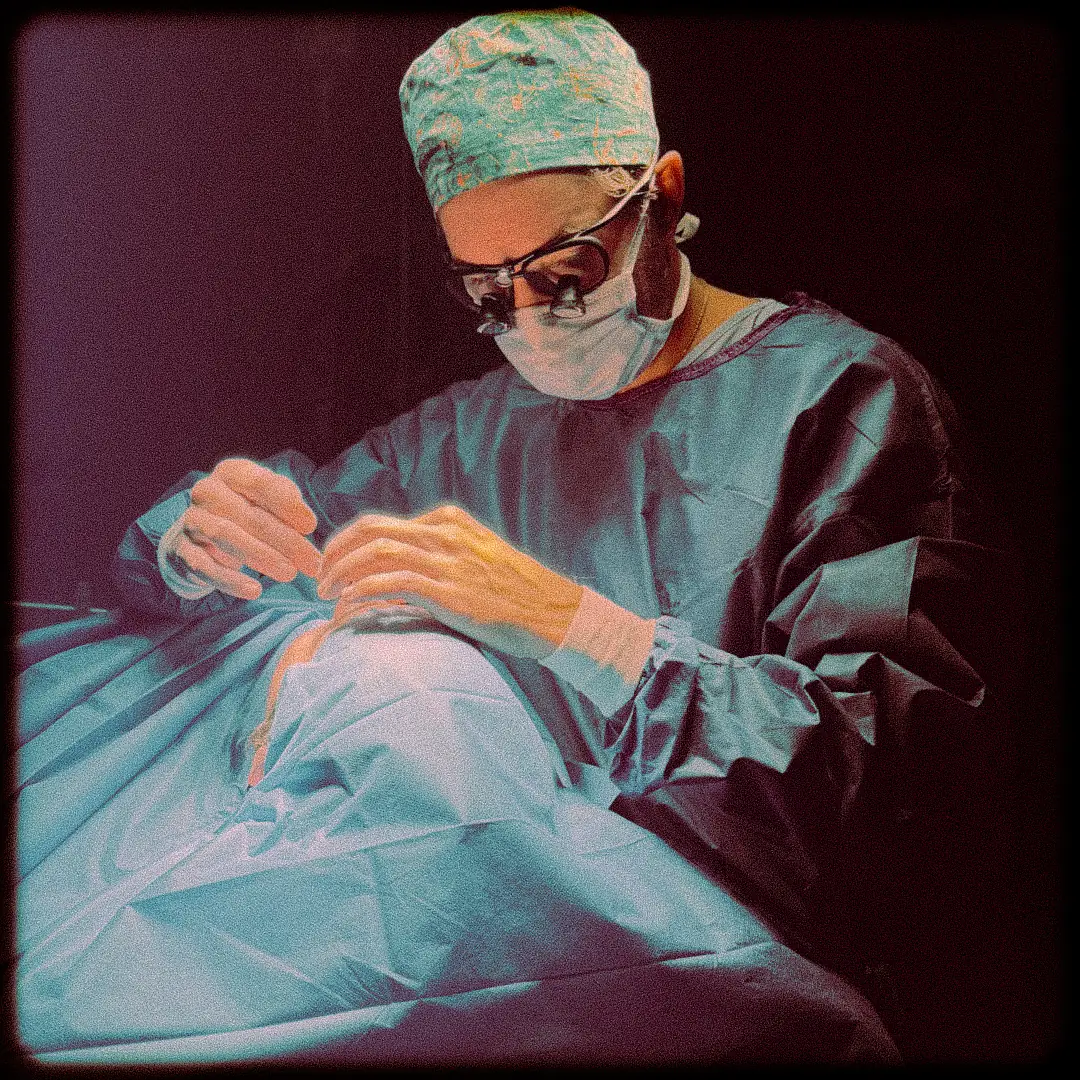
Rhinoplasty in Abu Dhabi
Rhinoplasty reshapes the bone and cartilage of the nose to bring it into harmony with the rest of the face while protecting — and often improving — nasal breathing. Dr Thomas Colson, Head of the Department of Plastic Surgery at SKMC, performs rhinoplasty across four distinct pathways, choosing the technique that fits each patient's anatomy rather than applying a single method to every nose.
Who performs rhinoplasty at SKMC?
In the UAE, rhinoplasty with Dr Thomas Colson is performed exclusively at Sheikh Khalifa Medical City (SKMC), Abu Dhabi, where he is Head of the Department of Plastic Surgery.
- Role: Consultant Plastic Surgeon and Head of the Department of Plastic Surgery, Sheikh Khalifa Medical City (SEHA network), Abu Dhabi.
- Licence: Department of Health – Abu Dhabi, licence GD47532.
- Board certification: double board-certified — SOFCPRE qualification and European Board (EBOPRAS) Fellowship.
- Experience: 18 years of experience.
- Profile: Dr Thomas Colson on the main website.
Why the choice of technique matters more than the nose
No two noses share the same skin thickness, cartilage strength, bone shape or breathing pattern. A dorsal hump on thin Caucasian skin and a wide tip on thick Middle Eastern skin are different engineering problems, and they call for different solutions.
Dr Thomas Colson is a double board-certified plastic surgeon (SOFCPRE; European Board, EBOPRAS) with 18 years of experience and Inter-University Diplomas in Microsurgery and Robotic Surgery. As a full plastic and reconstructive surgeon — not limited to a single approach — he is equipped to move between preservation, structural, ultrasonic and non-surgical methods within one practice.
Dr Colson is a member of EPSS (Emirates Plastic Surgery Society), anchoring his practice within the UAE plastic surgery community, alongside ISAPS (International Society of Aesthetic Plastic Surgery), SOFCPRE (Société Française de Chirurgie Plastique, Reconstructrice et Esthétique) and SOFCEP (Société Française de Chirurgie Esthétique et Plastique).
His full profile and the rest of his facial aesthetic surgery practice at SKMC are presented on the main site of Dr Colson's practice in Abu Dhabi.
The institutional advantage
Surgery is performed inside Sheikh Khalifa Medical City (SKMC), a government tertiary hospital in the SEHA network — with full anaesthetic, imaging and overnight-care infrastructure on site. The functional component of nasal surgery (septoplasty, turbinate reduction) may be eligible for Daman or Thiqa coverage when medically indicated.
Rhinoplasty techniques offered at SKMC
Each pathway has its own indications, recovery profile and ideal candidate. Explore the dedicated page for the technique most relevant to your goals.
Preservation Rhinoplasty
The "let-down / push-down" approach lowers a dorsal hump from underneath, keeping the natural cartilage roof and skin envelope intact. Suited to a hump with an already pleasing tip.
Read moreStructural Rhinoplasty
Builds a stable cartilage framework with septal or rib grafts to define the tip, correct deviation and rebuild support. The method of choice for thick skin and revision cases.
Read moreMinimally Invasive Rhinoplasty
Ultrasonic Piezo instruments sculpt bone with micrometre precision, sparing soft tissue and reducing bruising. Often combined with preservation; most patients return to social activities within 10 to 14 days.
Read moreMedical (Non-Surgical) Rhinoplasty
Injectable contouring of the nasal profile without surgery — for minor irregularities, camouflaging a small hump, or refining a previous result. A temporary, in-clinic option.
Read moreWho is a candidate for rhinoplasty?
- Facial growth is complete (generally from 17–18 years of age)
- A specific, realistic concern — dorsal hump, wide or drooping tip, deviation, breathing difficulty
- General good health, non-smoking or able to stop around surgery
- Understanding that the tip refines gradually over 12–18 months
- Seeking facial harmony rather than an identical "celebrity" nose
The consultation pathway
Every consultation at SKMC begins with a facial analysis and an airway examination. Dr Colson then performs a Crisalix 3D simulation, generating a realistic preview of the planned nasal profile so the surgical plan can be discussed and agreed before any decision is made.
Rhinoplasty recovery timeline
A general timeline for surgical rhinoplasty. The non-surgical pathway has minimal downtime and is described on its own page.
Rhinoplasty swelling timeline, stage by stage: what you may notice and what you can usually do from day 1 to month 18, what can make swelling last longer, and when to seek help.
A note on the UAE climate
Strict sun protection is advised for the first month after surgery. Intense heat and sun exposure can prolong swelling and affect healing incisions, so a hat, high-factor sunscreen on healed skin, and shade are recommended during the early recovery weeks in Abu Dhabi.
Comparing the four pathways
| Technique | Ideal for | Type | Social recovery |
|---|---|---|---|
| Preservation | Dorsal hump with a good natural tip | Surgical | ~10–14 days |
| Structural | Thick skin, tip refinement, deviation, revision | Surgical | ~14 days |
| Minimally Invasive (Piezo) | Bony work with reduced bruising | Surgical | ~10–14 days |
| Medical (Non-Surgical) | Minor irregularities, camouflage, touch-up | Injectable | Hours |
How to choose a rhinoplasty surgeon in Abu Dhabi
These criteria can be checked before or during a first consultation, whichever surgeon you are considering.
- A DoH licence in the surgeon's name. Rhinoplasty in Abu Dhabi is performed by a doctor licensed by the Department of Health – Abu Dhabi for the specialty concerned. Ask for the licence number; its validity can be confirmed with DoH.
- Specialist board certification. Ask which specialist board certified the surgeon in plastic surgery or in otolaryngology – facial plastic surgery, and since when.
- A hospital setting. Ask where the operation takes place and what is available on site: anaesthesia team, imaging, overnight care, and the plan if a complication occurs.
- Breathing assessed before shape. A change of shape can affect the nasal airway. A clinical practice guideline recommends evaluating every rhinoplasty candidate for nasal airway obstruction (Ishii et al., 2017); the Nose Self-Check helps prepare that discussion.
- A documented, realistic consultation. Motivations and expectations, the proposed technique and the reason for it, the recovery timeline, possible complications and the possible need for further surgery should all be discussed (Ishii et al., 2017).
- Follow-up through the first year. The final result is assessed 12 to 18 months after surgery (see the swelling timeline), so ask who provides follow-up and for how long.
Frequently asked questions
What types of rhinoplasty does Dr Colson perform in Abu Dhabi?
Is rhinoplasty at SKMC covered by Daman or Thiqa insurance?
How long is recovery after rhinoplasty?
What makes Dr Colson's rhinoplasty approach suited to Middle Eastern patients?
Will rhinoplasty change the way I breathe?
Does Dr Colson use open or closed rhinoplasty?
How many days off work do I need after rhinoplasty?
When does the swelling go down and the final result show?
I have thick skin — can I still have rhinoplasty?
Free, private rhinoplasty tools
Educational tools to use before or after a consultation — nothing is saved or sent.
Rhinoplasty Recovery Tracker
See your healing stage, the normal week-by-week timeline, and what is normal versus when to seek help.
Open the trackerNose Self-Check
Breathing, appearance, or both? A short NOSE-based self-check, with guidance on what a consultation could address.
Start the self-checkRhinoplasty Assistant
Ask general questions about nose surgery — types, recovery, insurance — in English or Arabic. Educational only, nothing is saved.
Open the assistantPlan Your Rhinoplasty Consultation
In the UAE, consultations and surgery with Dr Thomas Colson are performed exclusively at Sheikh Khalifa Medical City (SKMC) in Abu Dhabi, within the SEHA network. A pre-operative Crisalix 3D simulation lets patients preview the planned nasal profile before deciding.