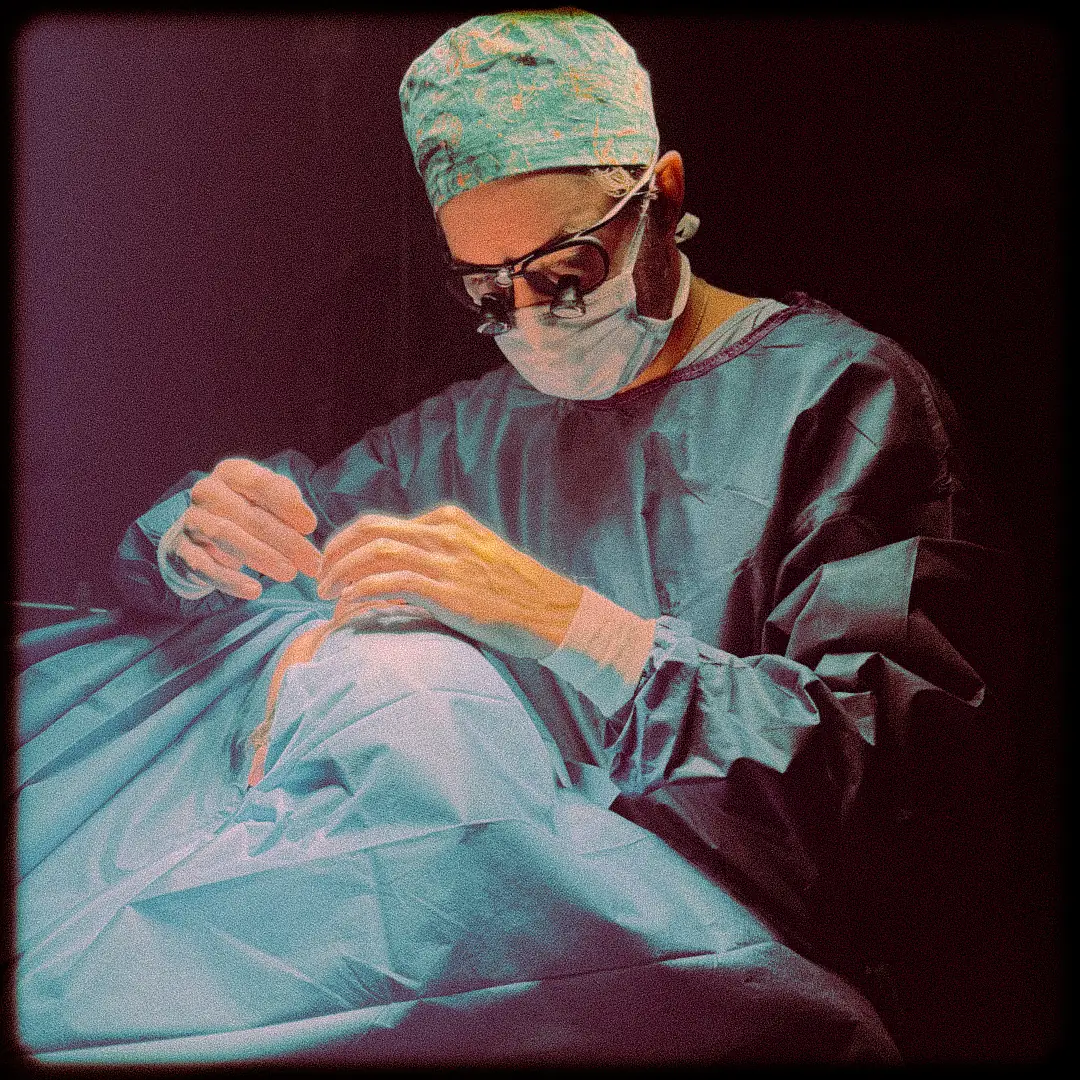
Dr Thomas Colson performing surgery with surgical loupes in the operating room at Sheikh Khalifa Medical City, Abu Dhabi
Plastic Surgery · Sheikh Khalifa Medical City

Rhinoplasty in Abu Dhabi

Rhinoplasty reshapes the bone and cartilage of the nose to bring it into harmony with the rest of the face while protecting — and often improving — nasal breathing. Dr Thomas Colson, Head of the Department of Plastic Surgery at SKMC, performs rhinoplasty across four distinct pathways, choosing the technique that fits each patient's anatomy rather than applying a single method to every nose.

A Surgeon, Not a Single Technique

Why the choice of technique matters more than the nose

No two noses share the same skin thickness, cartilage strength, bone shape or breathing pattern. A dorsal hump on thin Caucasian skin and a wide tip on thick Middle Eastern skin are different engineering problems, and they call for different solutions.

Dr Thomas Colson is a double board-certified plastic surgeon (French Board, SOFCPRE; European Board, EBOPRAS) with 18+ years of experience and Interstate Diplomas in Microsurgery and Robotic Surgery. As a full plastic and reconstructive surgeon — not limited to a single approach — he is equipped to move between preservation, structural, ultrasonic and non-surgical methods within one practice.

Dr Colson is a member of EPSS (Emirates Plastic Surgery Society), anchoring his practice within the UAE plastic surgery community, alongside ISAPS (International Society of Aesthetic Plastic Surgery), SOFCPRE (Société Française de Chirurgie Plastique, Reconstructrice et Esthétique) and SOFCEP (Société Française de Chirurgie Esthétique et Plastique).

The institutional advantage

Surgery is performed inside Sheikh Khalifa Medical City (SKMC), a government tertiary hospital in the SEHA network — with full anaesthetic, imaging and overnight-care infrastructure on site. The functional component of nasal surgery (septoplasty, turbinate reduction) may be eligible for Daman or Thiqa coverage when medically indicated.

The Four Pathways

Rhinoplasty techniques offered at SKMC

Each pathway has its own indications, recovery profile and ideal candidate. Explore the dedicated page for the technique most relevant to your goals.

01

Preservation Rhinoplasty

The "let-down / push-down" approach lowers a dorsal hump from underneath, keeping the natural cartilage roof and skin envelope intact. Suited to a hump with an already pleasing tip.

Read more
02

Structural Rhinoplasty

Builds a stable cartilage framework with septal or rib grafts to define the tip, correct deviation and rebuild support. The method of choice for thick skin and revision cases.

Read more
03

Minimally Invasive Rhinoplasty

Ultrasonic Piezo instruments sculpt bone with micrometre precision, sparing soft tissue and reducing bruising. Often combined with preservation for a faster social recovery.

Read more
04

Medical (Non-Surgical) Rhinoplasty

Injectable contouring of the nasal profile without surgery — for minor irregularities, camouflaging a small hump, or refining a previous result. A temporary, in-clinic option.

Read more
Candidacy

Who is a candidate for rhinoplasty?

  • Facial growth is complete (generally from 17–18 years of age)
  • A specific, realistic concern — dorsal hump, wide or drooping tip, deviation, breathing difficulty
  • General good health, non-smoking or able to stop around surgery
  • Understanding that the tip refines gradually over 12–18 months
  • Seeking facial harmony rather than an identical "celebrity" nose

The consultation pathway

Every consultation at SKMC begins with a facial analysis and an airway examination. Dr Colson then performs a Crisalix 3D simulation, generating a realistic preview of the planned nasal profile so the surgical plan can be discussed and agreed before any decision is made.

Recovery

Rhinoplasty recovery timeline

A general timeline for surgical rhinoplasty. The non-surgical pathway has minimal downtime and is described on its own page.

Day 0 Surgery performed at SKMC, usually under general anaesthesia. A lightweight external splint protects the new shape. Soft internal silicone splints allow breathing where used.
Day 6–7 Splint and any sutures removed. The first impression of the new profile appears, though the nose is still swollen.
Week 2–3 Most bruising and visible swelling resolve. Many patients return to work and social activities.
Month 3 The majority of the visible change has settled; the bridge looks defined.
Month 12–18 The tip reaches its final refinement as deep swelling fully resolves, particularly in thicker skin.

A note on the UAE climate

Strict sun protection is advised for the first month after surgery. Intense heat and sun exposure can prolong swelling and affect healing incisions, so a hat, high-factor sunscreen on healed skin, and shade are recommended during the early recovery weeks in Abu Dhabi.

At a Glance

Comparing the four pathways

TechniqueIdeal forTypeSocial recovery
PreservationDorsal hump with a good natural tipSurgical~10–14 days
StructuralThick skin, tip refinement, deviation, revisionSurgical~14 days
Minimally Invasive (Piezo)Bony work with reduced bruisingSurgical~10–14 days
Medical (Non-Surgical)Minor irregularities, camouflage, touch-upInjectableHours
Questions

Frequently asked questions

What types of rhinoplasty does Dr Colson perform in Abu Dhabi?
Dr Thomas Colson performs four rhinoplasty pathways at Sheikh Khalifa Medical City: preservation rhinoplasty (dorsal preservation for a natural bridge), structural rhinoplasty (cartilage-graft framework for tip definition and revision), minimally invasive rhinoplasty using ultrasonic Piezo instruments, and medical (non-surgical) rhinoplasty with injectable contouring. The technique is selected after facial analysis and Crisalix 3D simulation during consultation.
Is rhinoplasty at SKMC covered by Daman or Thiqa insurance?
The functional part of nasal surgery — septoplasty and turbinate reduction for breathing obstruction — may be eligible for coverage through the SEHA network and insurers such as Daman or Thiqa when a medical indication is documented. Purely aesthetic reshaping is not covered. Coverage is confirmed individually during the consultation at Sheikh Khalifa Medical City.
How long is recovery after rhinoplasty?
Most patients return to social activities 10 to 14 days after surgical rhinoplasty, once the external splint is removed. Bruising and swelling settle over 2 to 3 weeks. The nasal tip continues to refine for 12 to 18 months as deep swelling resolves, with the majority of the change visible by 3 months.
What makes Dr Colson's rhinoplasty approach suited to Middle Eastern patients?
Many patients in the UAE have thicker nasal skin and stronger cartilage, which require a robust structural framework to show definition. Dr Colson builds support with septal or, when needed, rib cartilage so the result remains stable through the healing of a thick soft-tissue envelope, rather than relying on reduction alone.
Will rhinoplasty change the way I breathe?
Dr Colson assesses nasal airflow at every rhinoplasty consultation. A deviated septum or enlarged turbinates can be corrected within the same operation through septoplasty and turbinate reduction, so the reshaped nose is designed to function as well as it looks.
Does Dr Colson use open or closed rhinoplasty?
Dr Colson selects the approach to fit the anatomy and the goal. Many preservation and limited cases are performed through an endonasal (closed) approach with incisions inside the nostrils. Complex tip work and revisions are usually performed through a short, well-concealed columellar incision (open approach) for precise control. The choice is discussed during planning.
Sheikh Khalifa Medical City

Plan Your Rhinoplasty Consultation

Consultations and surgery with Dr Thomas Colson are performed exclusively at Sheikh Khalifa Medical City (SKMC) in Abu Dhabi, within the SEHA network. A pre-operative Crisalix 3D simulation lets patients preview the planned nasal profile before deciding.

Direct LineCall 80050
WhatsApp02 410 2200 (SEHA bot)
SEHA AppManage appointments & records
LocationKaramah Street, Al Tibbiya, Abu Dhabi
Book via WhatsApp Before / After (Face)